



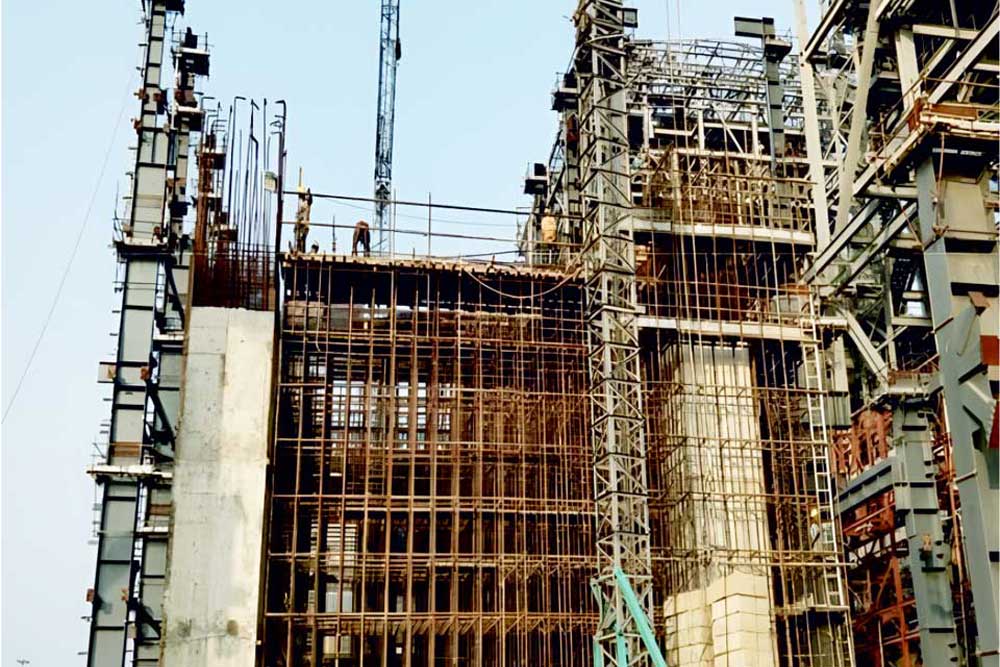
Building strengthening refers to upgrading the structural capacity of an existing building so it can withstand greater loads or hazards than it was originally designed for.
Goals:
• Increase load-carrying capacity
• Improve ductility (ability to deform without breaking)
• Comply with updated building codes
2. What is Retrofitting?
Retrofitting is a broader term that includes strengthening but also covers modifications made to a building to improve its performance, safety, functionality, or energy efficiency.
It can involve:
• Structural modifications (for earthquakes, wind, etc.)
• Fireproofing upgrades
• Seismic retrofitting
• Energy retrofitting (insulation, HVAC upgrades)
3. Why Retrofitting is needed
• Aging infrastructure
• Change in building usage (e.g., converting a warehouse into offices)
• Compliance with new codes
• Post-earthquake or disaster strengthening
• Risk mitigation (especially in seismic zones)
4. Common Structural Retrofitting Techniques
For Concrete Buildings:
• Jacketing of columns and beams (with concrete, steel, or fiber-reinforced polymer)
• Addition of shear walls for lateral strength
• Base isolation systems
• FRP (Fiber-Reinforced Polymer) wrapping
For Masonry Buildings:
• Wall anchors and ties
• Steel bracing systems
• Grouting and repointing
• Adding RC (Reinforced Concrete) bands
For Steel Structures:
• Adding braces or dampers
• Strengthening connections
• Increasing member sizes
5. Non-Structural Retrofitting
These aim to reduce risk from falling hazards, such as:
• Securing parapets, ceilings, and heavy equipment
• Retrofitting internal partitions
• Improving exit and egress systems
• Fire resistance improvements
6. Assessment before Retrofitting
Before any strengthening or retrofitting, a detailed structural assessment is done. This involves:
• Visual inspection
• Material testing
• Structural analysis
• Vulnerability assessment (especially seismic)
7. Retrofitting Standards and Codes
Standards differ by country. Examples:
• ASCE 41 (USA): Seismic Evaluation and Retrofit of Existing Buildings
• IS 15988:2013 (India): Seismic Evaluation and Strengthening of Existing Buildings
• Eurocode 8 (Europe): Design of Structures for Earthquake Resistance – Part 3
• High cost
• Disruption of building use
• Compatibility of new and old materials
• Architectural constraints
• Heritage or conservation restrictions
