Meta Title: Building Health Assessment Services | Structural Audit & NDT Testing Experts
Meta Description: Get professional Building Health Assessment Services from Kuber Enterprises | SRLX Division. Expert Structural Health Assessment, Structural Audit, NDT Testing, Building Inspection, and RCC Structure Assessment for residential, commercial, and industrial buildings across India.
Building Health Assessment Services by Kuber Enterprises | SRLX Division
Buildings are valuable assets that require regular monitoring and maintenance to ensure long-term safety, durability, and performance. Over time, structures may develop cracks, corrosion, water seepage, settlement issues, and other forms of deterioration that can affect structural integrity. A professional Building Health Assessment helps identify these issues at an early stage, allowing building owners to take corrective action before problems become severe.
At Kuber Enterprises | SRLX Division, we provide comprehensive Building Health Assessment Services, including Structural Health Assessment, Structural Audit, NDT Testing, Building Inspection, and RCC Structure Assessment for residential, commercial, industrial, and institutional buildings across India.
What is Building Health Assessment?
A Building Health Assessment is a systematic evaluation of a building’s physical and structural condition. It involves inspecting critical structural and non-structural components to identify signs of distress, deterioration, defects, or safety concerns.
The purpose of a Building Health Assessment is to determine the current condition of a structure, evaluate its structural safety, and estimate its remaining service life. This process helps property owners make informed decisions regarding maintenance, repairs, strengthening, or retrofitting requirements.
A comprehensive Building Health Assessment typically includes:
- Visual building inspection
- Structural condition evaluation
- Crack mapping and distress analysis
- Water seepage and dampness assessment
- Reinforcement corrosion assessment
- NDT Testing of concrete structures
- RCC Structure Assessment
- Structural Audit and safety recommendations
Regular assessments play a crucial role in maintaining structural safety, reducing future repair costs, and extending the life of the building.
Why is Building Health Assessment Important?
Why is Building Health Assessment important?
Building Health Assessment is essential because it helps identify hidden structural issues before they become major safety hazards. Many buildings appear structurally sound from the outside but may have internal deterioration that is not visible without professional inspection and testing.
Key Benefits of Building Health Assessment:
Identify Safety Risks
Early detection of structural weaknesses helps prevent accidents, failures, and safety hazards.
Detect Structural Deterioration
A Building Health Assessment can reveal corrosion, concrete deterioration, cracks, settlement, and other structural issues before they become critical.
Reduce Repair Costs
Addressing minor defects at an early stage is significantly more cost-effective than undertaking major structural repairs later.
Extend Building Life
Regular inspections and maintenance recommendations help maximize the service life of the structure.
Improve Asset Management
Building owners, facility managers, and housing societies can plan maintenance budgets more effectively with accurate condition assessments.
Ensure Regulatory Compliance
Many residential societies, commercial buildings, and industrial facilities require periodic structural evaluations to ensure compliance with safety regulations.
When Does a Building Need Health Assessment?
When does a building need health assessment?
A building should undergo a professional health assessment whenever there are signs of deterioration, changes in usage, or concerns regarding structural safety.
Common Situations Requiring Building Health Assessment:
Old Buildings (15–20+ Years Old)
As buildings age, construction materials naturally deteriorate due to environmental exposure and repeated loading.
Visible Cracks
Structural and non-structural cracks can indicate settlement, overloading, thermal movement, or structural distress.
Water Leakage and Dampness
Persistent seepage and dampness can weaken concrete and accelerate reinforcement corrosion.
Signs of Corrosion
Rust stains, spalling concrete, and exposed reinforcement bars are indicators of structural deterioration.
Change in Building Usage
Converting residential buildings into commercial facilities or increasing occupancy loads may require structural evaluation.
After Earthquakes, Fire, or Natural Disasters
Buildings affected by earthquakes, fires, floods, or major impacts should be assessed to determine structural safety before continued occupancy.
Our Building Health Assessment Services
Kuber Enterprises | SRLX Division provides a complete range of professional Building Health Assessment Services tailored to the specific needs of each structure.
Structural Health Assessment
Our Structural Health Assessment service evaluates the condition and performance of key structural components, including:
- Columns
- Beams
- Slabs
- Foundations
- Retaining structures
- Load-bearing elements
The assessment helps determine whether the structure is performing safely and identifies areas requiring repair or strengthening.
Structural Audit
A Structural Audit is a detailed engineering evaluation of a building's structural condition and safety.
Our Structural Audit services include:
- Structural condition assessment
- Identification of distress and defects
- Structural safety evaluation
- Stability review
- Repair recommendations
- Retrofitting recommendations
The audit provides building owners with a clear understanding of the structure’s condition and future maintenance requirements.
NDT Testing
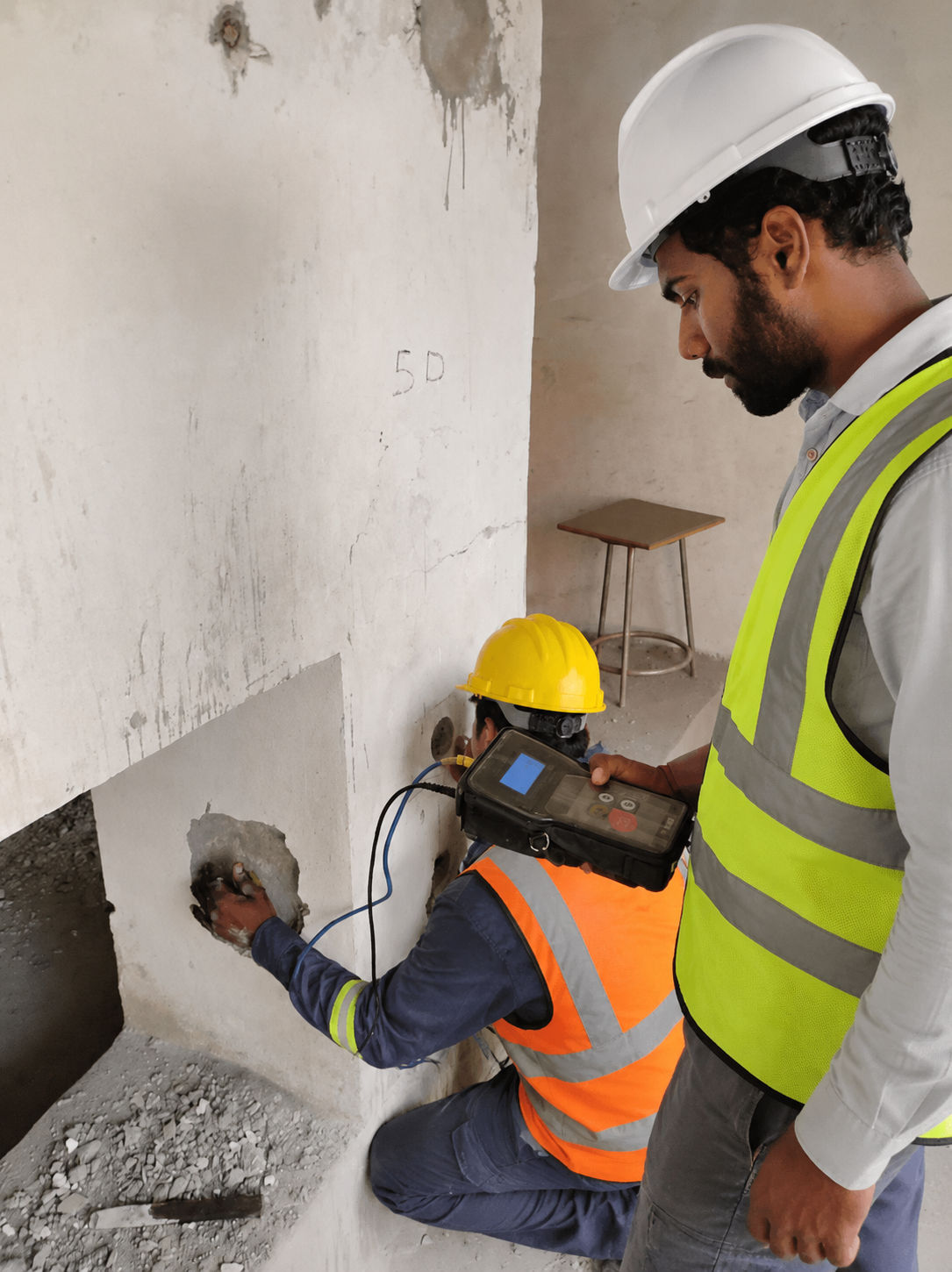
Non-Destructive Testing (NDT) is a critical component of Building Health Assessment because it allows engineers to evaluate structural elements without causing damage.
Our NDT Testing services include:
- Rebound Hammer Test
- Ultrasonic Pulse Velocity (UPV) Test
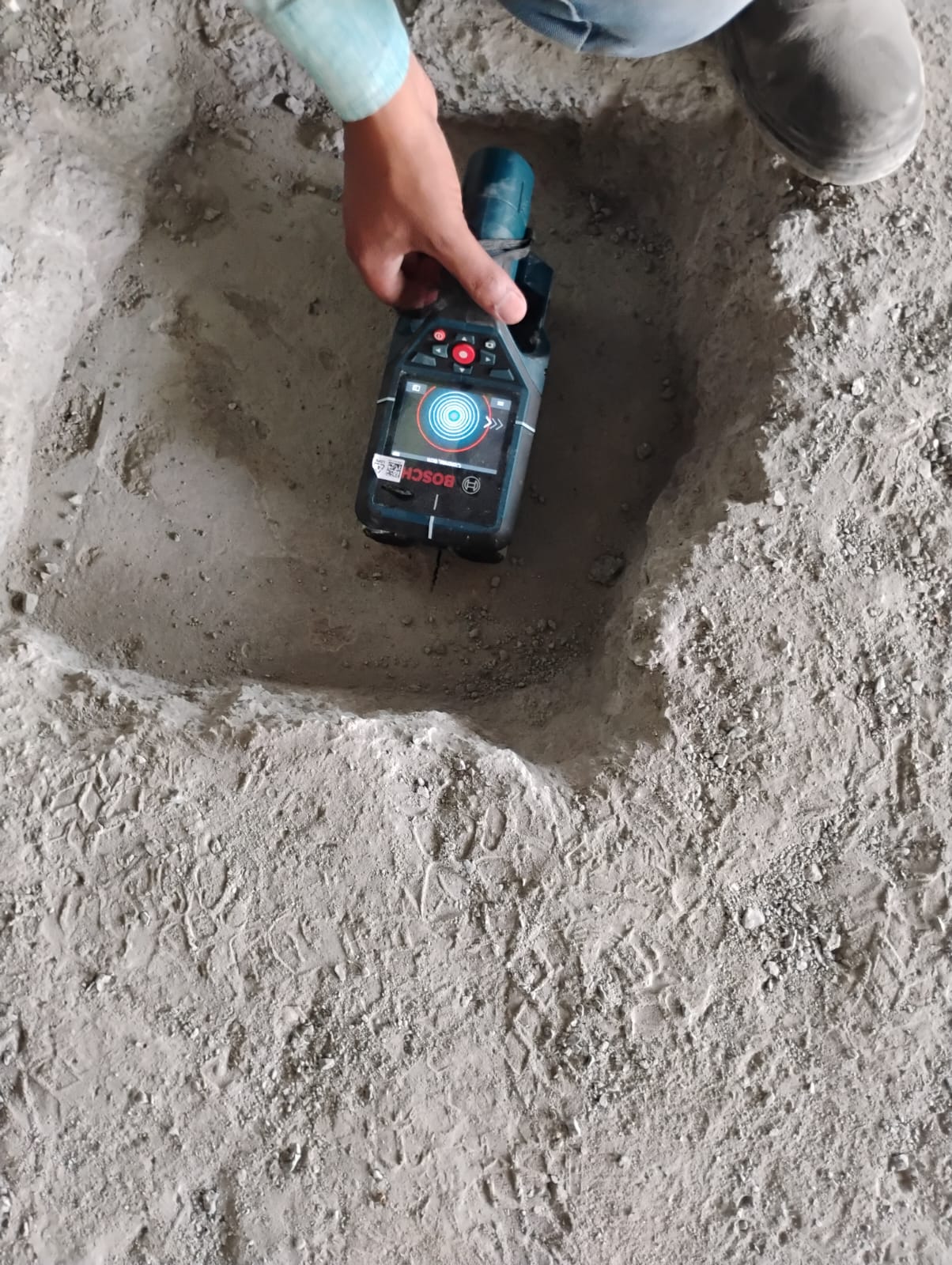
- Cover Meter Survey
- Half Cell Potential Test
- Carbonation Test
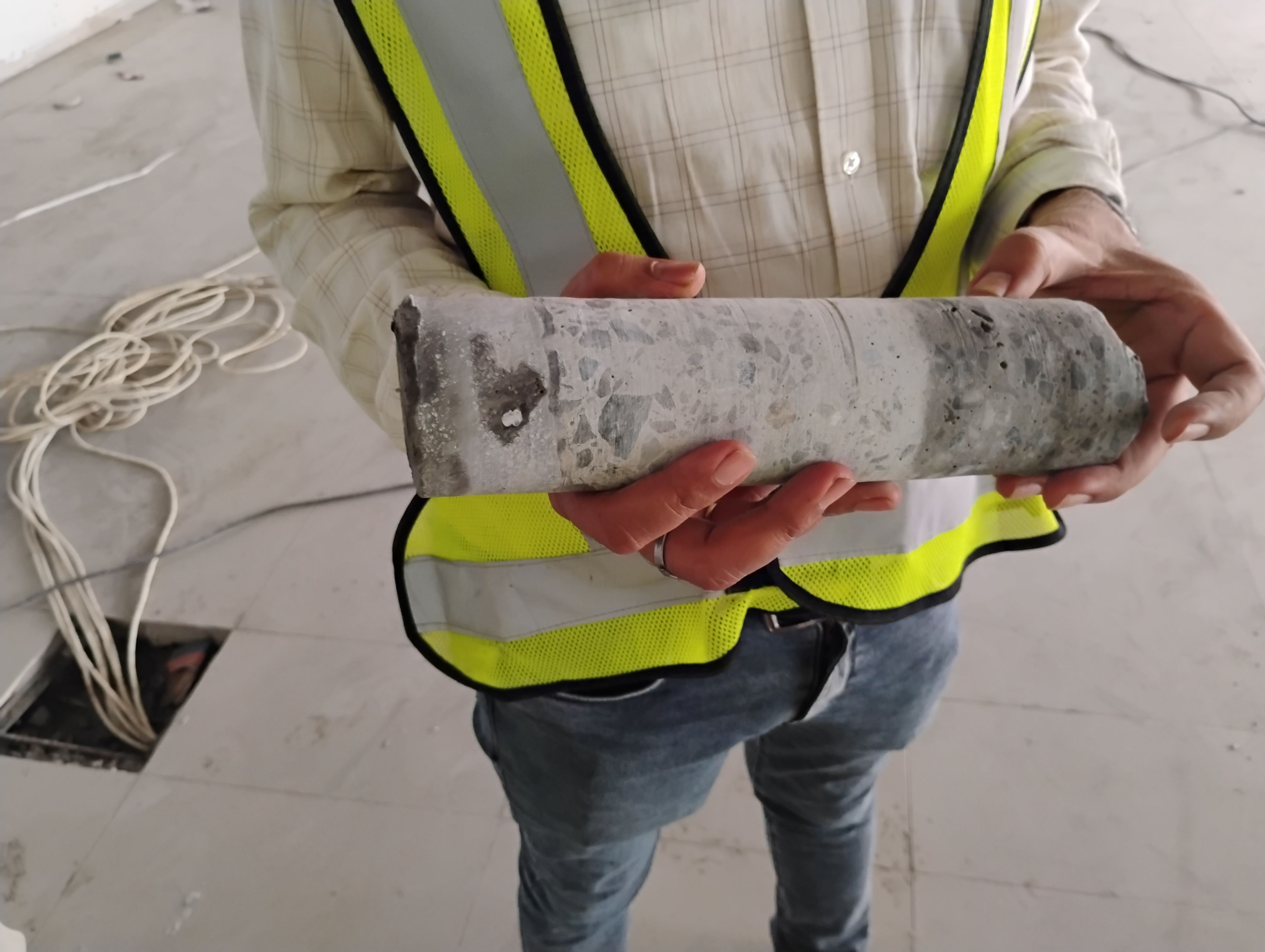
- Core Testing (if required)
NDT Testing helps assess:
- Concrete quality
- Compressive strength
- Reinforcement location
- Corrosion potential
- Internal defects and voids
Building Inspection
Our professional Building Inspection services focus on identifying visible signs of structural and non-structural deterioration.
We inspect:
- Cracks
- Dampness
- Water seepage
- Structural distress
- Concrete damage
- Corrosion signs
- Settlement issues
- Surface deterioration
The inspection findings form the foundation of the overall Building Health Assessment process.
Building Health Assessment for Old Structures
Older buildings require special attention due to the effects of ageing, environmental exposure, and long-term loading conditions.
Our assessment services for old structures are suitable for:
- Residential societies
- Commercial buildings
- Industrial plants
- Warehouses
- Educational institutions
- Hospitals
- Government buildings
Regular evaluation helps identify deterioration and determine the need for repairs, strengthening, rehabilitation, or retrofitting.
Residential Building Health Assessment
Residential buildings often experience structural issues due to ageing, poor maintenance, waterproofing failures, and environmental exposure.
We provide Residential Building Health Assessment services for:
- Apartments
- Villas
- Housing societies
- Residential complexes
- RWAs (Resident Welfare Associations)
- Independent houses
Our assessment helps ensure occupant safety while providing practical maintenance and repair recommendations.
RCC Structure Assessment
Reinforced Cement Concrete (RCC) structures require periodic evaluation to ensure long-term durability and structural safety.
Our RCC Structure Assessment includes:
- Concrete condition assessment
- Reinforcement corrosion analysis
- Load-carrying capacity evaluation
- Structural distress assessment
- Crack analysis
- Durability evaluation
The assessment provides valuable insights into the health and performance of RCC structures and helps determine appropriate repair strategies.
Benefits of Building Health Assessment
Investing in professional Building Health Assessment Services offers several long-term advantages:
| Benefit | Description |
|---|---|
| Enhanced Safety | Identifies risks before they become hazardous |
| Lower Repair Costs | Prevents costly emergency repairs |
| Increased Service Life | Extends building lifespan through timely maintenance |
| Better Maintenance Planning | Supports proactive asset management |
| Improved Property Value | Maintains structural integrity and market value |
| Technical Documentation | Provides professional reports for decision-making |
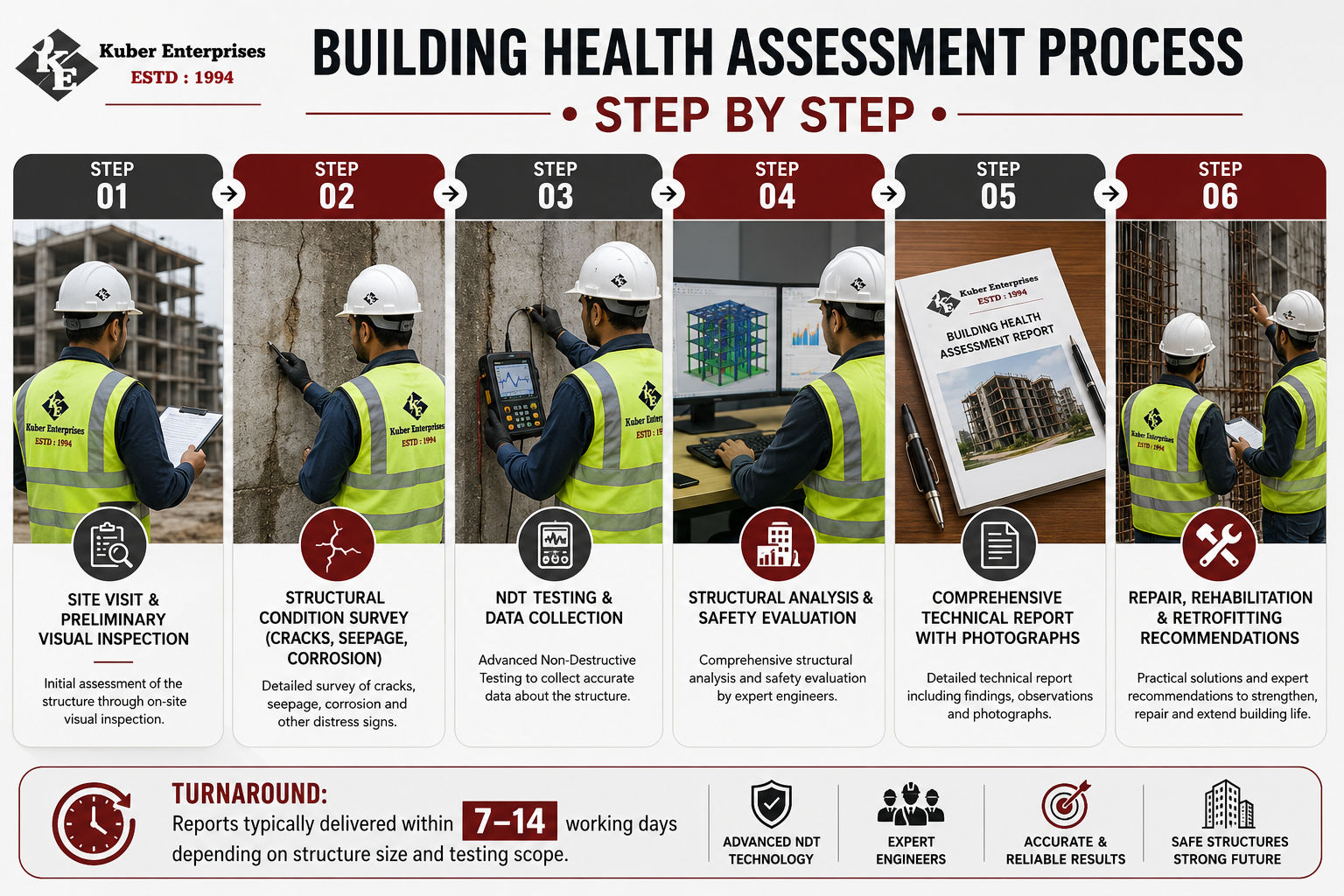
Our Building Health Assessment Process
Site Visit and Preliminary Inspection
Our engineers conduct a comprehensive visual inspection of the structure.
Structural Condition Survey
Detailed observations are made regarding cracks, deterioration, seepage, corrosion, and structural distress.
NDT Testing and Data Collection
Appropriate NDT Testing methods are used to evaluate concrete and reinforcement conditions.
Structural Analysis
Collected data is analyzed to assess structural safety and performance.
Detailed Technical Report
A comprehensive report is prepared with findings, photographs, test results, and recommendations.
Repair and Retrofitting Recommendations
Where necessary, we provide guidance on structural repairs, rehabilitation, strengthening, and retrofitting solutions.
What is the Difference Between Building Health Assessment and Structural Audit?
What is the difference between Building Health Assessment and Structural Audit?
| Building Health Assessment | Structural Audit |
|---|---|
| Evaluates overall building condition | Focuses primarily on structural safety |
| Includes waterproofing and visible defects | Focuses on structural elements |
| Broader scope | Technical structural evaluation |
| Covers maintenance-related issues | Covers structural stability and safety |
| Suitable for complete building condition review | Suitable for detailed structural analysis |
While both services are related, Building Health Assessment offers a wider perspective on the overall condition of the building, whereas a Structural Audit focuses specifically on structural safety and performance.
Building Health Assessment Services in Delhi
Kuber Enterprises | SRLX Division provides professional Building Health Assessment Services throughout:
Service Locations
Our experienced engineers serve residential, commercial, industrial, and institutional clients with reliable structural evaluation and inspection services.
Why Choose Kuber Enterprises | SRLX Division?
Trusted Building Health Assessment Service Provider
Kuber Enterprises | SRLX Division is committed to delivering accurate, reliable, and professional building assessment services.
Why Clients Choose Us:
30+ Years of Industry Experience
Experienced assessment support for different building types.
Qualified Structural Engineers
Technical evaluation by trained professionals.
Advanced NDT Testing Expertise
Reliable testing methods for concrete and RCC structures.
Comprehensive Technical Reports
Clear reports with findings, observations, and recommendations.
Practical Repair Recommendations
Useful guidance for repairs, rehabilitation, and maintenance.
PAN India Service Coverage
Services for residential, commercial, and industrial structures.
Our goal is not only to identify problems but also to provide practical solutions that enhance safety, durability, and performance.
Frequently Asked Questions
What is Building Health Assessment?
Building Health Assessment is a comprehensive evaluation of a building’s structural and physical condition to identify defects, deterioration, and safety concerns.
Why is Building Health Assessment important?
It helps detect structural problems early, improves safety, reduces repair costs, and extends building life.
How often should a building health assessment be conducted?
Buildings older than 15–20 years should undergo periodic assessments. Immediate assessment is recommended if visible signs of distress appear.
What tests are performed during Building Health Assessment?
Common tests include Rebound Hammer Test, UPV Test, Cover Meter Survey, corrosion assessment, and visual Building Inspection.
What is the difference between Building Health Assessment and Structural Audit?
Building Health Assessment evaluates the overall condition of a building, while Structural Audit focuses specifically on structural safety and performance.
How much time does a Building Health Assessment take?
The duration depends on building size, complexity, accessibility, and the scope of testing required.
Need Professional Building Health Assessment Services?
Kuber Enterprises | SRLX Division provides expert Building Health Assessment, Structural Health Assessment, Structural Audit, NDT Testing, Building Inspection, Old Building Structural Audit, Residential Building Health Assessment, and RCC Structure Assessment services for residential, commercial, industrial, and institutional structures across India.
Whether your building is showing cracks, water seepage, corrosion, structural distress, or signs of ageing, our team can help you evaluate its condition and recommend effective repair and strengthening solutions.
Contact Kuber Enterprises | SRLX Division today for reliable Building Health Assessment Services in Delhi NCR and across India.
Call Now for Assessment